Tips for Navigating the Educational System as a Blind Student
For a blind student, education is not only about attending classes, completing assignments, and appearing for examinations. It is also about finding accessible learning resources, communicating with teachers, using the right technology, understanding available support, and developing the confidence to ask for what is needed.
With the right environment and support, blind and visually impaired students can pursue education, develop professional skills, participate in extracurricular activities, and work toward independent careers.
However, navigating the educational system can sometimes feel complicated. From choosing the right school or college to accessing textbooks, examinations, technology, and scholarships, students and their families may have many questions.
This guide shares practical tips for blind students navigating education, with a focus on accessibility, confidence, technology, and available support.
1. Understand Your Learning Needs
Every student learns differently, and this is especially important when planning education for a blind student.
Before choosing a school, college, or course, identify the learning methods and resources that work best for you.
These may include:
- Braille textbooks and notes
- Audio learning materials
- Screen readers
- Accessible PDFs and digital documents
- Tactile diagrams and learning materials
- Recorded lectures
- One-to-one academic support
- Mobility and orientation training
Understanding your own learning preferences makes it easier to communicate your requirements to teachers and educational institutions.
Instead of simply saying that you need “special support,” explain exactly what helps you learn effectively.
2. Choose an Educational Institution Carefully
The reputation of a school or college is important, but accessibility should also be considered before making a decision.
When exploring an institution, ask questions such as:
- Are digital learning materials accessible?
- Can students use screen readers on institutional websites and platforms?
- Are teachers familiar with inclusive teaching methods?
- Are examination accommodations available?
- Is the campus accessible and easy to navigate?
- Are libraries and computer labs accessible?
- Can study materials be provided in suitable formats?
- Is there a student support or disability services department?
If possible, visit the institution before admission and speak directly with teachers or administrators.
A supportive environment can make a significant difference in a student’s educational experience.
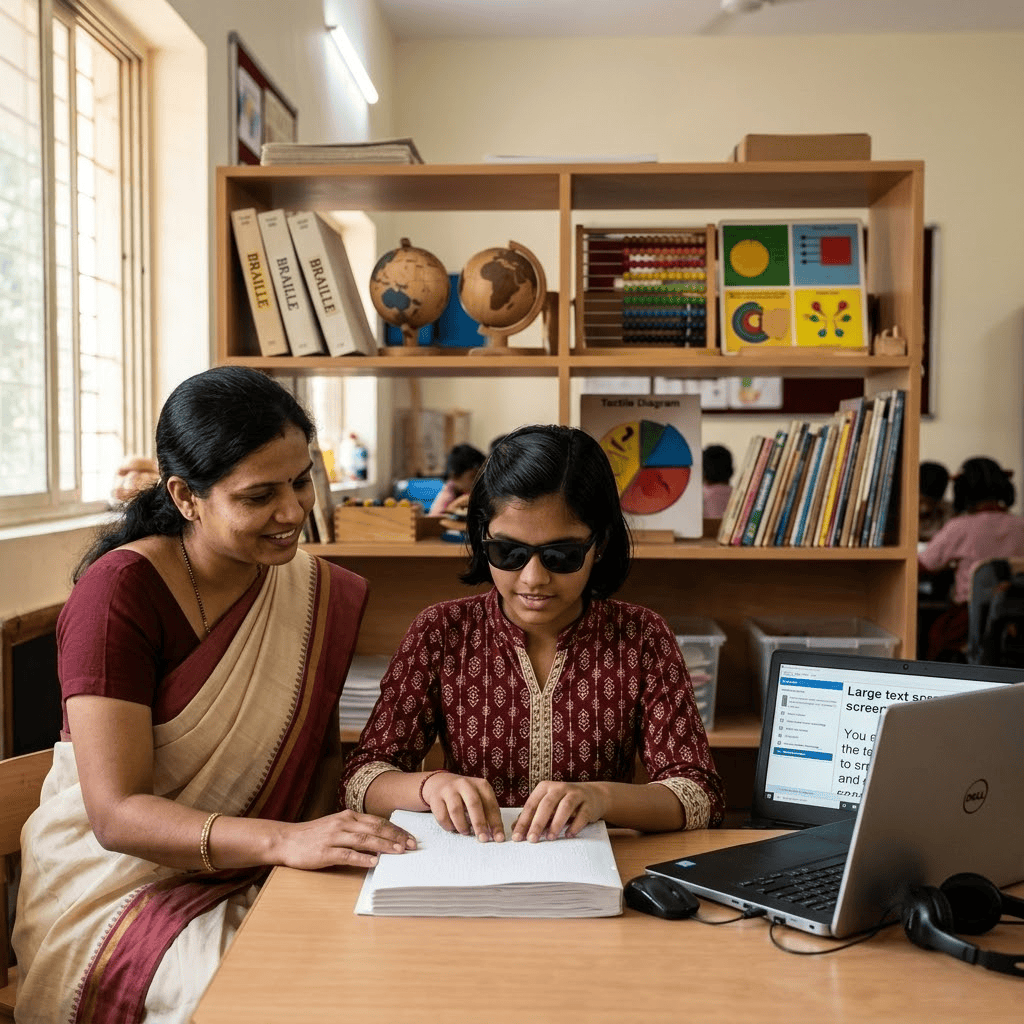
3. Learn to Use Assistive Technology
Technology has become an important part of education for blind students.
Screen readers can convert text displayed on computers and smartphones into speech or Braille output. Students can use them to read documents, browse websites, write assignments, communicate through email, and access online learning platforms.
Other useful technologies can include:
- Screen-reading software
- Refreshable Braille displays
- OCR tools
- Accessible note-taking applications
- Audio recording tools
- Smartphone accessibility features
- Voice assistants
- Accessible educational platforms
Learning these tools early can make students more independent.
Technology should not be viewed only as an accommodation. It can also become an important tool for academic success and future employment.
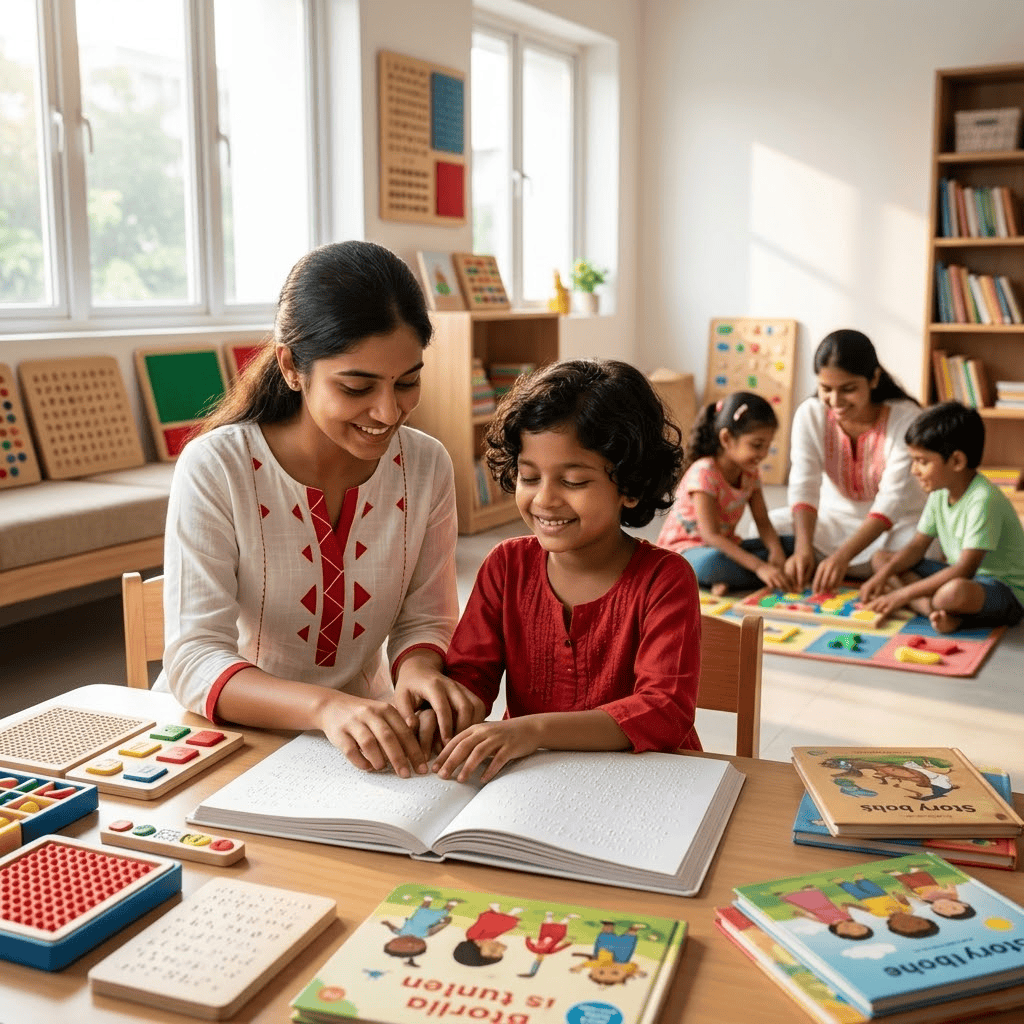
4. Become Comfortable With Braille
Braille remains an important literacy tool for many blind students.
It can help students read and write independently, understand spelling and punctuation, take notes, study mathematics, and organize information.
Students may use:
- Braille books
- Braille notes
- Refreshable Braille displays
- Braille labels
- Tactile learning resources
Digital technology and Braille can complement each other.
For example, a student might use a screen reader for researching information online and Braille for reading detailed notes or writing certain types of information.
The important thing is to develop a learning system that works comfortably and efficiently.
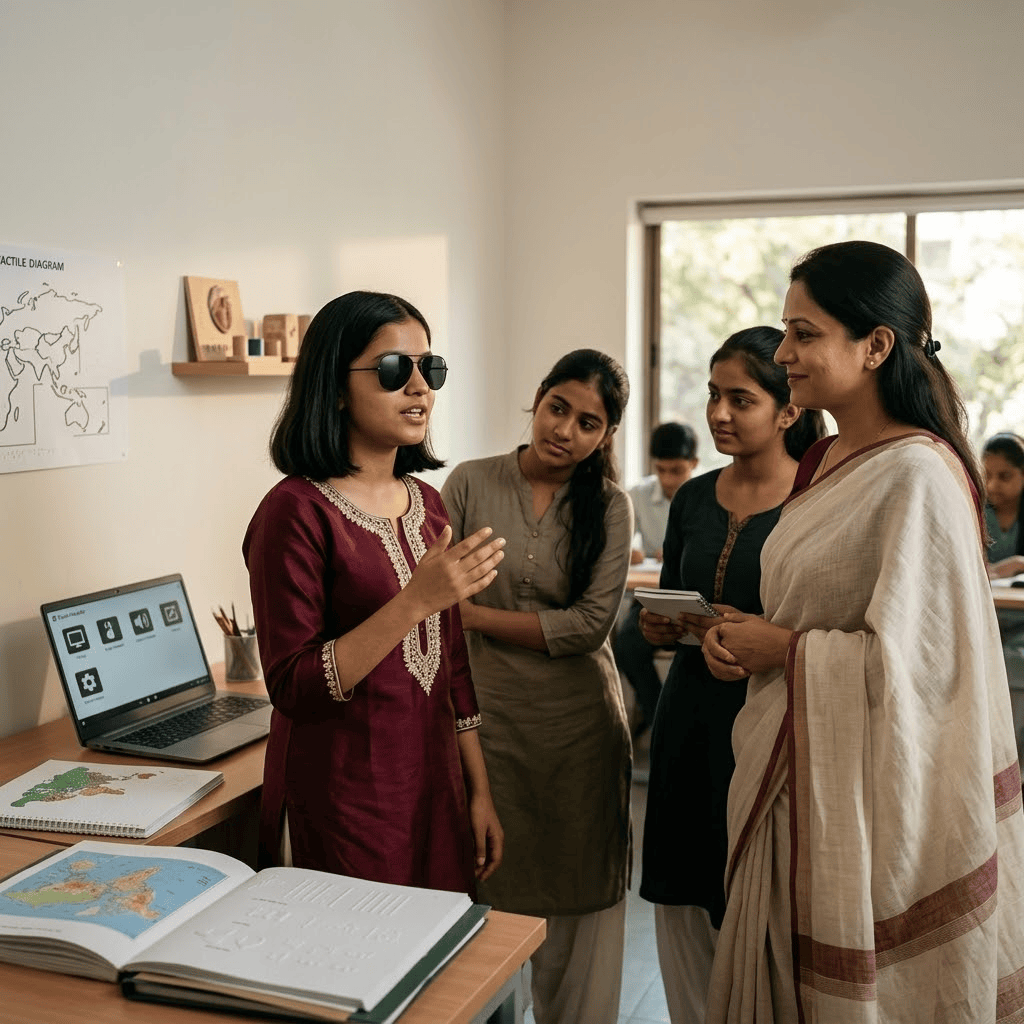
5. Communicate Clearly With Teachers
One of the most useful skills a student can develop is the ability to communicate their learning requirements clearly.
Teachers may want to provide support but may not always know what a student needs.
Instead of waiting until a problem becomes serious, talk to teachers early.
For example, explain:
- Which materials are difficult to access
- How assignments can be submitted
- Which documents need an accessible format
- How diagrams or visual information can be explained
- What type of examination support is required
Good communication can help teachers understand how to make their classrooms more inclusive.
6. Understand Examination Support
Examinations can create additional challenges if materials or procedures are not accessible.
Students should understand the examination accommodations available through their educational institution and applicable rules.
Depending on the circumstances and applicable policies, support may include:
- A scribe or writer
- Additional examination time
- Accessible question papers
- Computer-based examinations
- Appropriate seating arrangements
- Other approved accommodations
Students should not wait until the examination day to discuss these requirements.
It is better to communicate with the relevant school, college, examination authority, or disability support office well in advance.
Keep copies of relevant documentation and approvals so that arrangements can be confirmed before examinations begin.
7. Build Strong Digital Skills
Digital skills are becoming increasingly important in almost every area of education and employment.
A blind student who becomes comfortable using accessible technology can access a much wider range of educational resources.
Important skills may include:
- Typing
- Microsoft Word or other document editors
- Online research
- Presentation software
- Spreadsheets
- Video conferencing
- Online learning platforms
- File management
- Internet safety
These skills are useful beyond the classroom.
They can also help students prepare for higher education, internships, employment, and independent living.
8. Take Advantage of Scholarships and Support Programs
The cost of education can be a concern for many students and families.
Blind and visually impaired students may be eligible for scholarships, educational assistance, or other forms of support depending on their location, institution, eligibility, and current government or organizational programs.
Students should regularly check:
- Government scholarship portals
- Educational institution websites
- University disability support departments
- Scholarship foundations
- Nonprofit organizations
- Community organizations
Always check the current eligibility criteria, application deadlines, and required documents directly with the organization offering the program.
9. Develop Communication and Life Skills
Academic education is only one part of becoming independent.
Blind students can also benefit greatly from developing practical life and communication skills.
These may include:
- Public speaking
- Communication
- Time management
- Personal organization
- Financial awareness
- Decision-making
- Problem-solving
- Travel and mobility skills
- Social interaction
- Workplace communication
These skills can help students become more confident in situations outside the classroom.
They can also support the transition from education to employment.
10. Build a Support Network
No student should feel that they have to navigate everything alone.
A strong support network may include:
- Parents and family members
- Teachers
- Classmates
- Mentors
- Counselors
- Disability support professionals
- Volunteers
- Nonprofit organizations
- Other blind or visually impaired students
Connecting with other students who have similar experiences can be particularly valuable.
They may be able to share practical advice about accessible resources, technology, examinations, higher education, and career preparation.
11. Participate in Activities Beyond Academics
Education is not limited to textbooks and examinations.
Blind students should also have opportunities to participate in sports, music, arts, competitions, clubs, cultural activities, volunteering, and leadership programs.
These experiences can help develop:
- Confidence
- Creativity
- Teamwork
- Communication
- Leadership
- Social skills
Extracurricular activities can also help students discover talents that may eventually become hobbies, careers, or sources of income.
An inclusive educational environment should provide opportunities for students to participate rather than simply making academic materials accessible.
12. Prepare Early for Higher Education and Careers
Career planning should begin before graduation.
Students can start exploring career options based on their interests, strengths, education, and accessible technology.
Useful steps include:
- Identify areas of interest.
- Research suitable courses and careers.
- Develop relevant digital skills.
- Look for internships and volunteering opportunities.
- Build communication skills.
- Create a professional resume.
- Learn workplace technology.
- Connect with mentors and professionals.
The goal is not to limit career choices because of blindness.
Instead, students should understand the tools, skills, and support they can use to pursue their chosen path.
The Importance of Inclusive Education
Inclusive education means creating learning environments where students with different abilities can participate meaningfully.
For blind students, inclusion can involve much more than simply providing accessible textbooks.
It can include:
- Accessible digital content
- Trained and supportive teachers
- Assistive technology
- Accessible examinations
- Mobility support
- Inclusive extracurricular activities
- Equal participation
- Career guidance
- Respect and dignity
When educational institutions focus on accessibility and inclusion, students are better positioned to develop their abilities and participate independently.
Supporting Blind Orphan Girls Through Education
For children who are both visually impaired and without parental support, educational challenges can be even more complex.
Access to education may need to be combined with safe accommodation, healthcare, rehabilitation, nutrition, emotional support, life skills, and long-term guidance.
This is one of the areas where organizations such as Speaking Eyes Foundation focus their efforts.
Speaking Eyes Foundation works toward empowering blind orphan girls through education, care, skill development, healthcare, rehabilitation, and opportunities for greater independence.
Through initiatives focused on education and empowerment, the aim is to create an environment where girls can learn new skills, build confidence, discover their abilities, and prepare for a more self-reliant future.
You can learn more about the foundation’s work through the Speaking Eyes Foundation website.
How Families and Communities Can Help
Supporting a blind student’s education does not always require expensive resources.
Families, teachers, volunteers, and communities can make a meaningful difference by:
- Providing accessible study materials
- Encouraging independence
- Supporting technology training
- Helping students explore opportunities
- Promoting inclusive classrooms
- Avoiding unnecessary dependence
- Encouraging participation in activities
- Connecting students with mentors
- Creating awareness about accessibility
Sometimes, the most valuable support is simply giving a student the confidence to try something independently.
Final Thoughts
Navigating the educational system as a blind student may require planning, communication, technology, and persistence. But blindness should not prevent a student from pursuing meaningful education or building an independent future.
With accessible learning resources, supportive teachers, assistive technology, life skills, and equal opportunities, blind students can develop their talents and participate fully in education and society.
For blind orphan girls in particular, consistent support can make an enormous difference. Education can provide more than academic knowledge—it can create pathways toward confidence, skills, independence, and opportunity.
Every student deserves the opportunity to learn. Every girl deserves the opportunity to dream. And every child deserves the chance to build a future with dignity.
Frequently Asked Questions
Can blind students study in regular schools and colleges?
Yes. Blind students can pursue education in mainstream schools and colleges when appropriate accessibility measures, learning resources, technology, and support are available.
How do blind students study?
Blind students may use Braille, screen readers, audio resources, accessible digital documents, tactile materials, and other assistive technologies depending on their individual needs.
What technology can help blind students with education?
Screen readers, refreshable Braille displays, OCR tools, accessible smartphones, voice assistants, and accessible educational platforms can support learning.
What challenges do blind students face in education?
Common challenges can include inaccessible study materials, visual information, examination arrangements, digital accessibility, mobility, and lack of awareness about inclusive education.
How can I support education for blind orphan girls?
You can support through donations, volunteering, awareness, educational assistance, skill-development programs, or by helping organizations working with blind orphan girls.