For a visually impaired girl, having access to education is important—but education alone is not enough. She also needs the freedom to participate, the opportunity to make choices, protection from discrimination, access to information, and the confidence to speak up when her rights are not being respected.
For many girls, especially those growing up without family support, these opportunities can be difficult to access. Social attitudes, inaccessible environments, lack of awareness, limited educational resources and unequal opportunities can create barriers long before a girl gets the chance to show what she is capable of.
This is why Speaking Eyes Foundation believes that supporting visually impaired girls must go beyond basic care. It must also include education, confidence, skills, awareness and advocacy.
Advocacy is not simply about speaking on someone’s behalf. It is about creating an environment where girls can understand their rights, express their needs and participate in society with dignity and confidence.
Why Advocacy Matters for Visually Impaired Girls
Disability can create barriers, but many of the difficulties faced by visually impaired girls are created by inaccessible systems and social attitudes rather than by blindness itself.
A school may have textbooks that are not available in accessible formats. A website may not work properly with a screen reader. An examination process may not provide appropriate support. A public building may not be easy to navigate independently.
These situations can limit a girl’s opportunities even when she has the ability and determination to succeed.
Advocacy helps bring attention to these barriers and encourages schools, institutions, communities and society to think about inclusion from the beginning.
In India, the Rights of Persons with Disabilities Act, 2016 includes provisions relating to equality and non-discrimination, women and children with disabilities, education, accessibility, protection from abuse and access to justice. The law provides an important framework for protecting the rights and participation of persons with disabilities.
Understanding Rights Is the First Step
A person cannot easily ask for support if they do not know what support may be available to them.
For visually impaired girls, awareness can begin with simple questions:
- What educational support can I ask for?
- How can I access learning materials?
- What accessibility arrangements are available?
- Where can I report discrimination or barriers?
- How can I participate independently in school and community activities?
- What skills can help me prepare for higher education and employment?
Teaching girls about these questions can gradually help them become more confident in making decisions about their own lives.
This is also why sharing stories of impact matters. Real stories can help society understand that visually impaired girls are not defined by their disability. They are students, artists, learners, future professionals, creators and leaders with individual goals and ambitions.
Education Is More Than Getting Into a Classroom
Education is one of the strongest foundations for independence. But simply being enrolled in a school does not automatically create an inclusive educational experience.
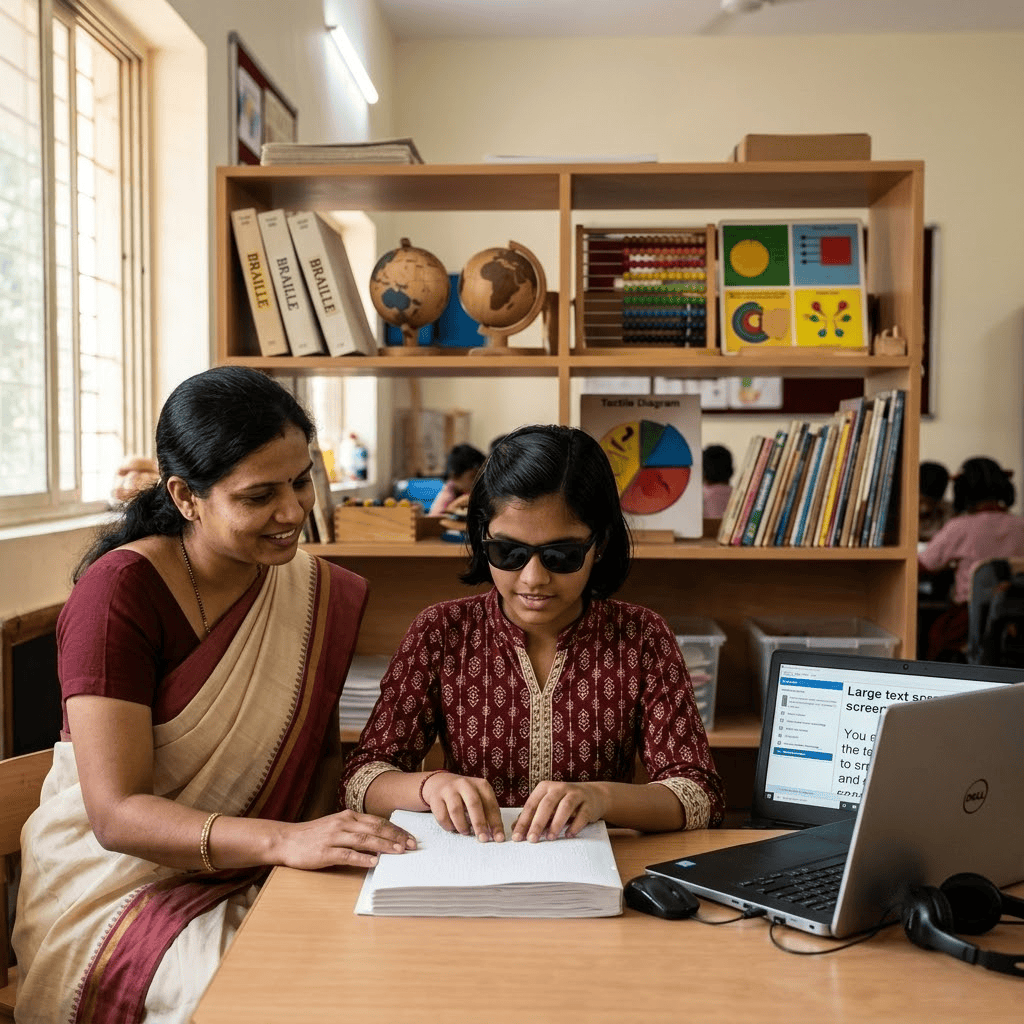
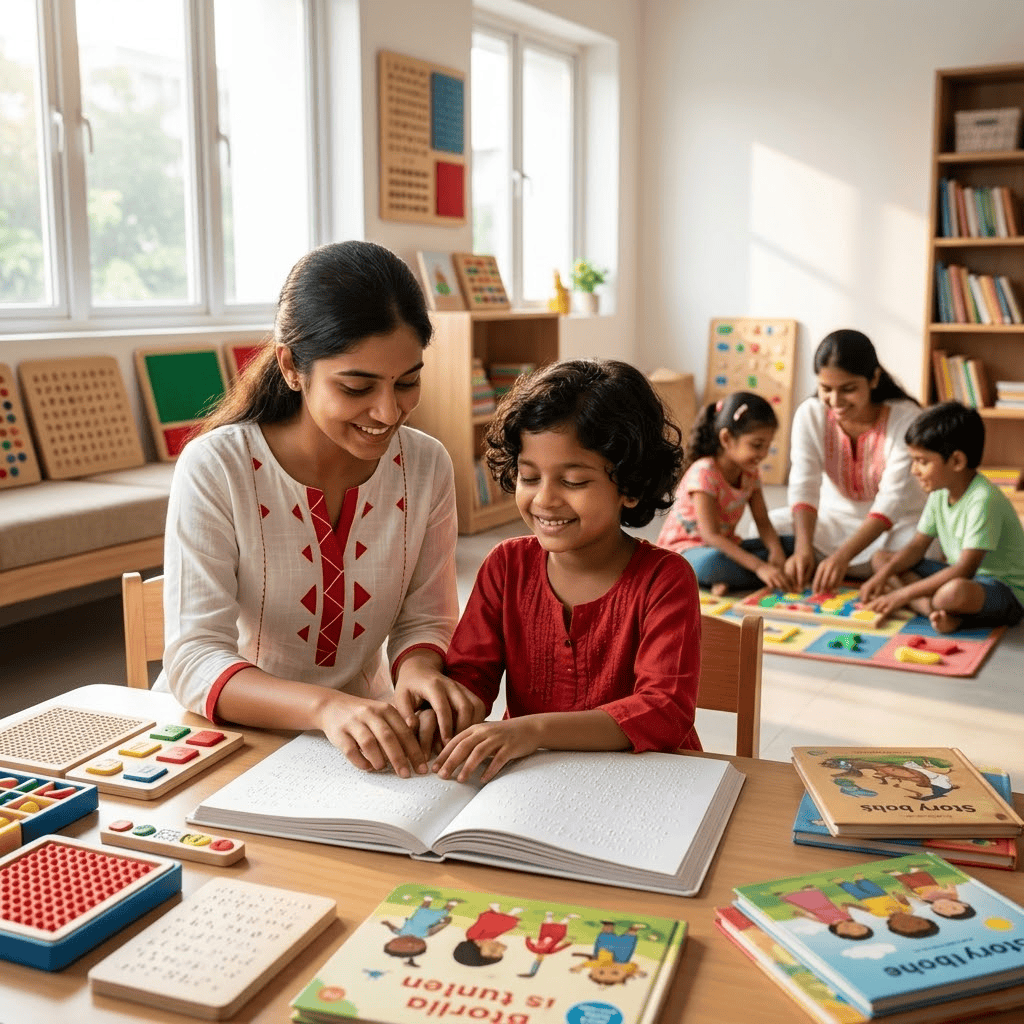
A visually impaired student may need accessible books, Braille materials, screen-reader compatible resources, appropriate examination arrangements, trained teachers and an environment where she can participate in classroom activities.
The Rights of Persons with Disabilities Act, 2016 specifically contains provisions concerning the duties of educational institutions and measures to promote inclusive education.
For this reason, advocacy for education should focus not only on admission but also on meaningful participation and equal opportunity.
At Speaking Eyes Foundation, education forms an important part of our broader mission to create opportunities for blind orphan girls. You can learn more about our approach through our programs and areas of work.
Accessibility Should Be Part of Everyday Life
Accessibility is often discussed as if it is a special facility created only for people with disabilities. In reality, accessibility helps remove unnecessary barriers so that people can participate more independently.
For a visually impaired girl, accessibility may include:
- Accessible educational websites and applications.
- Digital documents that work with screen readers.
- Braille and tactile learning resources.
- Accessible examination materials.
- Clear navigation within schools and public spaces.
- Accessible communication and information.
- Technology that supports independent learning.
When accessibility is considered from the beginning, girls do not have to constantly ask for exceptions. Instead, they can participate more naturally alongside everyone else.
Why Girls Need a Stronger Voice
Disability and gender can intersect in ways that create additional challenges for girls and women with disabilities.
A girl may face assumptions about what she can learn, where she can work, how independently she can travel or what decisions she can make for herself.
These assumptions can become barriers when they influence the way families, institutions or communities treat her.
Advocacy therefore means challenging the idea that blindness should determine a girl’s future.
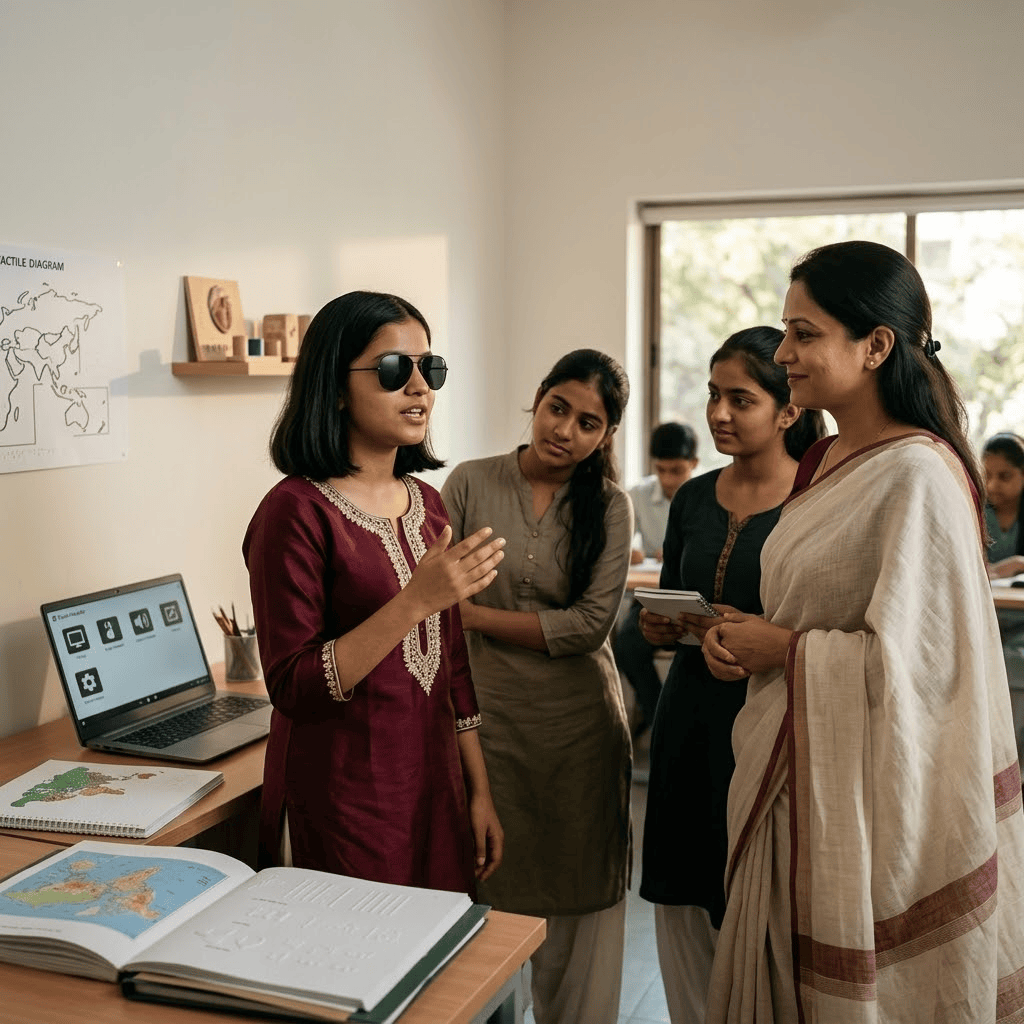
A visually impaired girl should be encouraged to ask questions, make choices, learn new skills, express her opinions and participate in decisions that affect her life.
Her disability should never be treated as a reason to automatically lower expectations for her education or future.
Building Confidence Through Life Skills
Rights become more meaningful when a person has the confidence and practical skills to use them.
For visually impaired girls, life-skills development can include communication, mobility, technology, personal organisation, decision-making, problem-solving and social interaction.
These skills can help a girl move from dependence toward greater independence.
Our skill development initiatives are designed around the broader idea that education should prepare girls not only for examinations, but also for real life.
Learning how to use a smartphone with accessibility features, communicate confidently, travel safely, manage everyday tasks or speak in front of a group can make a significant difference to a girl’s confidence.
Technology Can Strengthen Independence
Technology has changed the way many visually impaired students learn and communicate.
Screen readers, smartphones, accessible applications, audio resources, Braille displays and other assistive technologies can help students access information that might otherwise be difficult to use.
However, technology is useful only when students have access to it and know how to use it effectively.
This is why digital skills and technology training should become part of modern disability inclusion.
When a girl can independently access educational resources, write a document, send an email, research information or communicate online, technology becomes more than a convenience—it becomes a tool for independence.
Advocacy Also Means Protection
Advocacy is not limited to education and accessibility. Safety and protection are equally important.
Children and women with disabilities can face risks of neglect, abuse, violence and exploitation. The Rights of Persons with Disabilities Act, 2016 includes provisions concerning protection from abuse, violence and exploitation.
Creating safe environments requires awareness, responsible adults, appropriate reporting mechanisms and communities that take concerns seriously.
For girls without reliable family support, the importance of a safe and supportive environment can be even greater.
This is one reason why our work goes beyond education. Learn more about our activities and initiatives for blind girls and the different ways we work toward their development and well-being.
From Awareness to Action
Awareness is the beginning, but advocacy becomes meaningful when awareness leads to action.
Schools can review the accessibility of their learning materials. Teachers can learn inclusive teaching practices. Organisations can make their websites and digital platforms more accessible. Communities can challenge stereotypes. Volunteers can contribute their time and skills.
Even individuals can play a role by changing the way they talk about disability.
Instead of focusing only on what a visually impaired person cannot see, we can focus on what she can learn, create, contribute and achieve when barriers are removed.
How Volunteers Can Support Advocacy
Volunteers can become an important part of creating awareness and supporting inclusive opportunities.
Depending on their skills and the organisation’s current requirements, volunteers may contribute through:
- Educational support and mentoring.
- Reading and recording accessible learning materials.
- Digital and computer training.
- Communication and confidence-building activities.
- Awareness campaigns.
- Community outreach.
- Creative activities, music and arts.
- Career and skill-development support.
If you would like to contribute your time, you can explore volunteer opportunities with Speaking Eyes Foundation.
Sometimes, a few hours of someone’s time can give a girl access to knowledge, encouragement or a skill that stays with her for years.
The Role of Families and Communities
Advocacy does not belong only to organisations or professionals. Families and communities have an equally important role.
A supportive family can encourage a girl to become independent instead of doing everything for her.
A supportive teacher can ask how learning materials can be made accessible instead of assuming that a student cannot participate.
A supportive community can create opportunities for girls to participate in events, activities and conversations rather than keeping them on the sidelines.
These small changes can gradually create a much more inclusive environment.
Why Long-Term Support Matters
Real empowerment does not happen through a single workshop or one awareness campaign.
A girl may need years of educational support, mentoring, healthcare, rehabilitation, life-skills training and career guidance before she is ready to build an independent future.
This is why long-term support is at the heart of meaningful work with blind orphan girls.
Speaking Eyes Foundation works toward creating opportunities that go beyond immediate assistance. Through education, care, skills and empowerment initiatives, the goal is to help girls develop the confidence and abilities they need for the future.
Every Girl Deserves to Be Heard
Advocacy begins when we stop speaking only about disability and start listening to the people living with it. A visually impaired girl deserves the opportunity to express her needs, make choices, learn new skills and participate in society with dignity.
Creating a Future Where Inclusion Is Normal
The goal of advocacy should not be to create a world where visually impaired girls constantly have to ask for special treatment.
The goal should be to create systems where accessibility, inclusion and equal opportunity are considered normal.
Schools should expect students with different needs. Digital platforms should be designed with accessibility in mind. Public spaces should be easier to navigate. Employers should focus on skills and ability rather than assumptions about disability.
When these changes become part of everyday life, a visually impaired girl does not have to spend all her energy fighting barriers. She can spend that energy learning, creating, working and building her future.
“True inclusion begins when we stop limiting a girl’s future by what she cannot see—and start creating opportunities for everything she can become.”
How You Can Support the Movement
Everyone has a role to play in creating a more inclusive society.
You can support visually impaired girls by learning about accessibility, sharing awareness, volunteering your skills, supporting educational programs or contributing to organisations working in this area.
If you would like to support the work of Speaking Eyes Foundation, you can support our mission through a donation.
You can also explore our Stories of Impact to learn more about the issues, opportunities and experiences connected with our work.
Standing Together for Equal Opportunities
The journey toward equality for visually impaired girls requires more than good intentions. It requires accessible education, supportive communities, practical skills, technology, protection and people who are willing to speak up when barriers exist.
For blind orphan girls, that support can be especially meaningful. A safe environment can provide stability. Education can open doors. Skills can create independence. Mentoring can build confidence. Advocacy can help ensure that their voices are heard.
At Speaking Eyes Foundation, we believe every blind orphan girl deserves more than care. She deserves the opportunity to learn, grow, make choices and build a future with dignity.
When society removes barriers instead of placing limits, a girl’s possibilities become much greater.
Because inclusion is not about giving someone a place at the table. It is about making sure they have an equal opportunity to participate.
Frequently Asked Questions
What rights do visually impaired girls have in India?
India’s Rights of Persons with Disabilities Act, 2016 provides a legal framework covering equality and non-discrimination, women and children with disabilities, education, accessibility, protection and access to justice, among other areas. Specific rights and support can depend on the circumstances and applicable rules.
Why is advocacy important for visually impaired girls?
Advocacy helps identify and address barriers that can prevent visually impaired girls from accessing education, information, safety, skills and equal opportunities.
How can education support independence for blind girls?
Accessible education can help girls develop academic knowledge, digital skills, communication abilities and confidence that can support further education, employment and independent living.
How can I volunteer to support visually impaired girls?
You can explore the Speaking Eyes Foundation volunteer program to learn about ways to contribute your time and skills.
How can I support blind orphan girls?
You can support through volunteering, donations, awareness campaigns, educational support and by sharing information about opportunities for visually impaired girls. You can also support Speaking Eyes Foundation directly.